How to become a welder
Three things, in order: training in the basics, an AWS Certified Welder credential in the process a target job needs, and a code-specific qualification an employer adds on top.
Most welders reach all three through one of two paths: a formal training program followed by testing, or an employer or union apprenticeship that builds the same skills on the job.
Step 1: Learn the basics
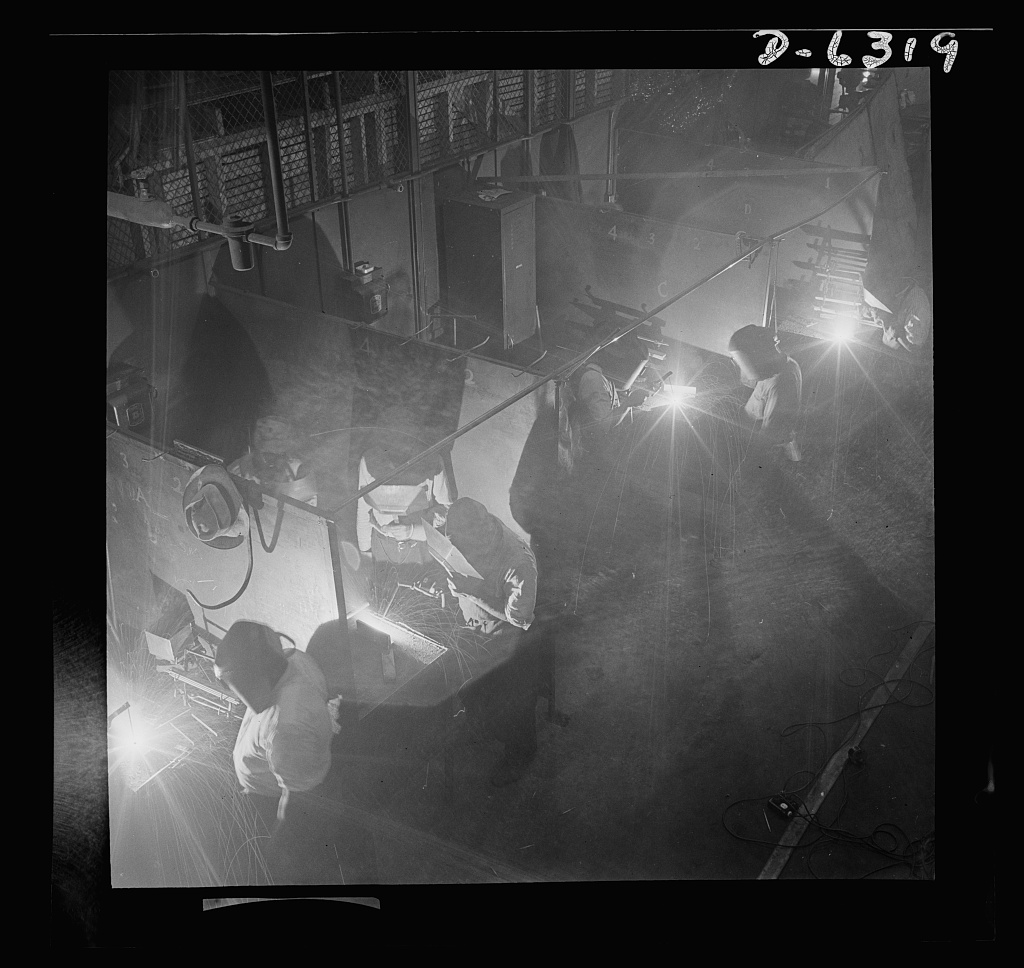
A training program or apprenticeship covers the core welding processes (SMAW, GMAW, GTAW, FCAW), shop safety, blueprint reading, and metal properties before a student welds a graded test coupon. Program length in this directory runs from a single semester to a 2-year degree; see how long welding school takes for real examples pulled from the schools themselves.
Step 2: Choose a training path
Trade schools, community colleges, and apprenticeships train welders differently. Trade schools and community colleges run structured classroom-plus-shop programs with a set tuition; apprenticeships pair paid on-the-job work with related classroom instruction, usually through a union or an individual employer. Program tuition in our directory is sourced from IPEDS and College Scorecard; browse all states to compare programs near you by tuition, phone, and AWS ATF status.
How a welding apprenticeship works
A welding apprenticeship is paid, on-the-job training combined with related classroom instruction, typically run through a union or an employer program. The apprentice works and earns wages from day one, learning the trade under a certified welder or supervisor on the job, while also attending related technical instruction, often at a union hall, community college, or employer training center. That "earn while you learn" structure is the defining difference from the trade-school path. Pay rates, program length, and how many apprenticeship slots exist vary by union local and by individual employer program; there is no single national dataset that centralizes them the way this directory centralizes accredited school programs. Apprenticeship openings also aren't centrally listed the way accredited schools are, so finding one takes direct outreach to local unions, such as the Ironworkers or Boilermakers, and employers running their own training programs.
How the trade-school path compares
A trade-school or community-college path runs the other direction: tuition due upfront or by term, a structured curriculum combining classroom and lab time, and a course of study that's typically shorter and more fixed in duration than an apprenticeship's on-the-job timeline. This is the path our directory tracks in detail. Across the 938 programs in our directory, most are public institutions, community and technical colleges. Public programs report a median in-state tuition of $4,265/yr (n=651). That's the number to weigh against an apprenticeship's wages: instead of earning while training, a trade-school student pays a known, published rate while completing a curriculum built around a set schedule of courses. Neither path is better in the abstract; an apprenticeship trades a longer, less predictable timeline for income during training, while a trade-school path trades upfront cost for a fixed, published structure searchable in the state directory.
Step 3: Get AWS Certified Welder
AWS Certified Welder (CW) is the credential most job postings mean when they ask for a "certified welder." AWS states there are no prerequisite courses or minimum experience required; a candidate simply welds a test coupon at an AWS Accredited Test Facility (ATF) and it is graded against code acceptance criteria. See the full AWS CW page for cost and test-format detail, including which schools in this directory host a co-located ATF.
A median wage of $53,750 and about 45,600 projected annual openings a year for welders, cutters, solderers, and brazers through 2034.BLS OEWS, May 2025; see Step 5 below
Step 4: Add the code-specific qualification your job needs
Once a welder holds AWS CW, employers add a code-specific qualification for the actual work: D1.1 for general structural steel, D1.2 for aluminum, D1.5 for bridges, and so on. These are codes an employer qualifies a welder against directly, not individual AWS tests. The full breakdown is in the certification codex.
Step 5: Find your first job
Local fabrication and welding shops are the most direct route to a first job. Browse verified local welding shops by metro to find employers near you. Nationally, the U.S. Bureau of Labor Statistics reports a median wage of $53,750 (BLS OEWS, May 2025) and about 45,600 projected annual openings from 2024 to 2034 for welders, cutters, solderers, and brazers, mostly from workers retiring or changing occupations rather than industry growth. More detail is in welding careers overview.