What does a welding inspector do, and what do they make
What does a welding inspector do?
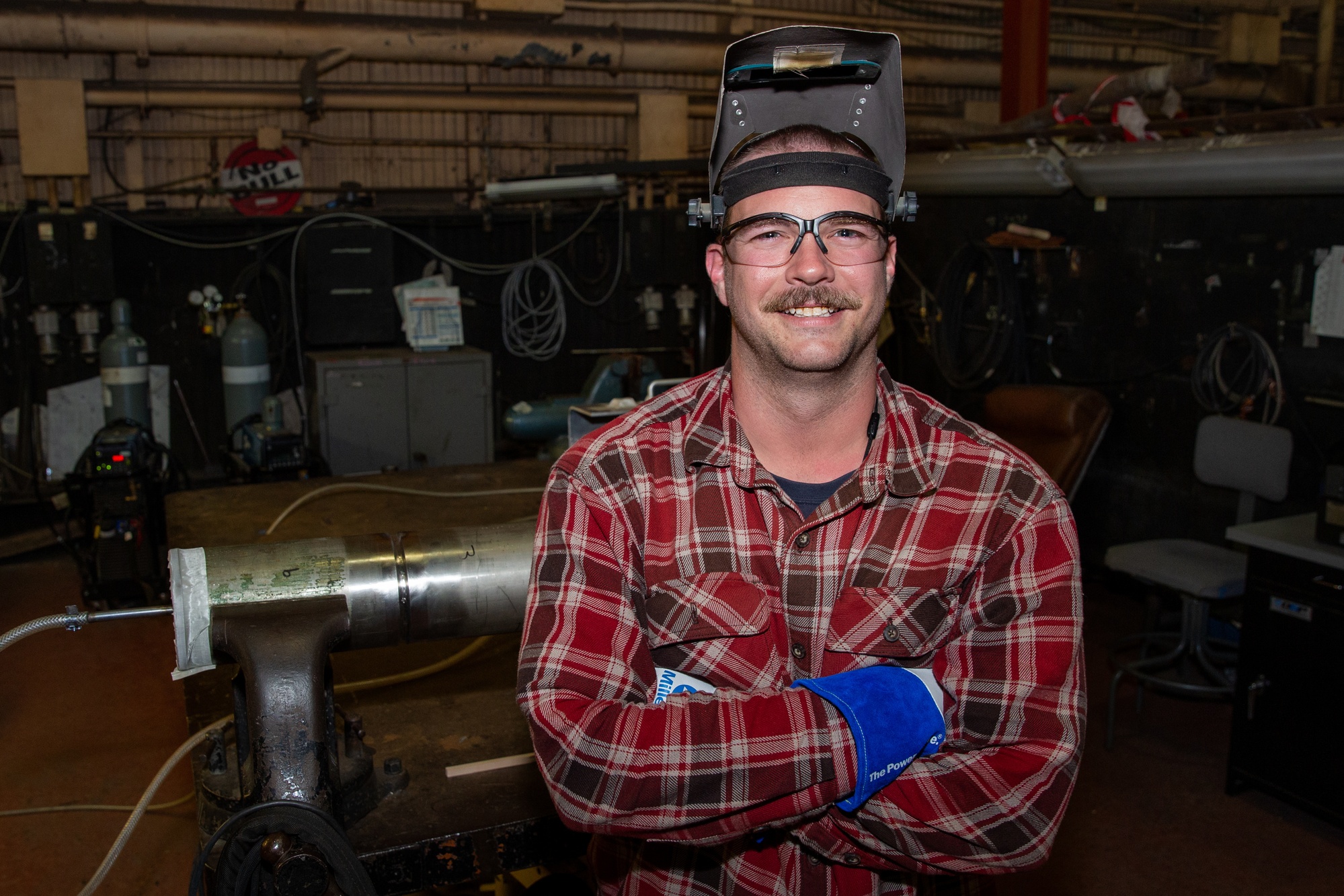
A welding inspector checks a completed or in-progress weld against a code to confirm it meets the required standard for strength, appearance, and safety. That means reviewing the weld procedure, checking joint preparation, watching or reviewing the welding process itself, and examining the finished weld visually or with nondestructive testing methods. The inspector's job is to catch a weld that does not meet code before it goes into service, not to perform the weld.
Inspectors work across the same industries welders do: manufacturing, construction, pipeline, and structural steel work, wherever a code (such as the D-series structural codes) governs what "acceptable" means for a given joint.
What certification does a welding inspector hold?
The credential named in our certification codex for this role is the American Welding Society's Certified Welding Inspector (CWI). It is a separate, career-advancement credential, distinct from the entry-level AWS Certified Welder (CW), which is a performance-only test of a welder's ability to produce a code-compliant weld with no prerequisite course required.
CWI certification requires documented experience and passing AWS's exam. Beyond that, we are not going to state specific prerequisite hours or years here: AWS updates its exact eligibility requirements from time to time, and the reliable place to check current prerequisites is AWS's own certification page, not a third-party summary. If you are considering CWI, confirm the current requirements directly with AWS before you commit time or money to preparation.
Learn more about how the CWI credential fits into the broader certification landscape on our CWI certification page, or browse the full certification codex to see how CW, CWI, and the D-series codes relate to each other.
What does a welding inspector make?
BLS does not break out welding inspector pay as its own occupational category. The Bureau's welder wage data covers "welders, cutters, solderers, and brazers" as a single group, with a median annual wage of $53,750 (BLS OEWS, May 2025). Inspection is a distinct role from production welding, but BLS's published wage tables do not give inspectors a separate line, so we are not going to invent a number that does not exist in the source data.
What we can say, grounded in how the certification is structured rather than a wage figure, is that CWI sits above CW in the AWS credential hierarchy specifically because it represents a shift from producing welds to evaluating them against a code. That shift, from performer to evaluator, is the value proposition: a documented, exam-verified qualification to judge weld quality, which is a different skill set than running a torch or a stinger.
How CWI differs from a code qualification
It is easy to confuse CWI with the D-series codes (D1.1 structural steel, D1.2 aluminum, D1.3 sheet steel, D1.5 bridge welding, D1.6 stainless steel, D1.8 seismic supplement). Those codes are not personal certifications AWS issues to an individual. A welder is typically "qualified to" a code through an employer-administered test that follows that code's procedure. CWI, by contrast, is a personal credential issued directly by AWS to the inspector, the same way CW is issued directly to the welder. Understanding that distinction matters if you are choosing which credential to pursue next, and the certification codex lays out how each piece fits.
Is becoming a welding inspector a good move?
If you are already a working welder and want to move from producing welds to evaluating them, CWI is the recognized path for that shift, per AWS's own certification taxonomy. The honest version of the pitch is career progression and a documented, exam-tested qualification, not a specific salary number, since BLS does not publish one for the inspector role separately. Confirm current CWI prerequisites and exam details on AWS's site before you plan a study timeline.
FAQ
What does a welding inspector do?
A welding inspector checks welds against a code for compliance and quality, reviewing procedure, joint preparation, and the finished weld, rather than performing the weld itself.
What certification do welding inspectors need?
AWS's Certified Welding Inspector (CWI) is the credential named in our certification codex for this role. It requires documented experience and passing AWS's exam; confirm exact current prerequisites on AWS's own site.
How much does a welding inspector make?
BLS does not report inspector pay as a separate category. It publishes a combined median of $53,750 (BLS OEWS, May 2025) for welders, cutters, solderers, and brazers, without breaking out inspection specifically.
Is CWI the same as a D1.1 qualification?
No. CWI is a personal credential AWS issues to an individual inspector. D1.1 and the other D-series codes are procedures a welder is qualified to, typically through an employer-administered test, not a certification AWS issues directly.
Do I need to be a certified welder before pursuing CWI?
CWI requires documented experience and passing AWS's exam. The exact eligibility path, including whether a CW credential or a specific work history satisfies that requirement, is set by AWS and can change, so confirm it directly with AWS rather than relying on a secondhand summary.