How much do underwater welders make
There's no separate BLS number for this job
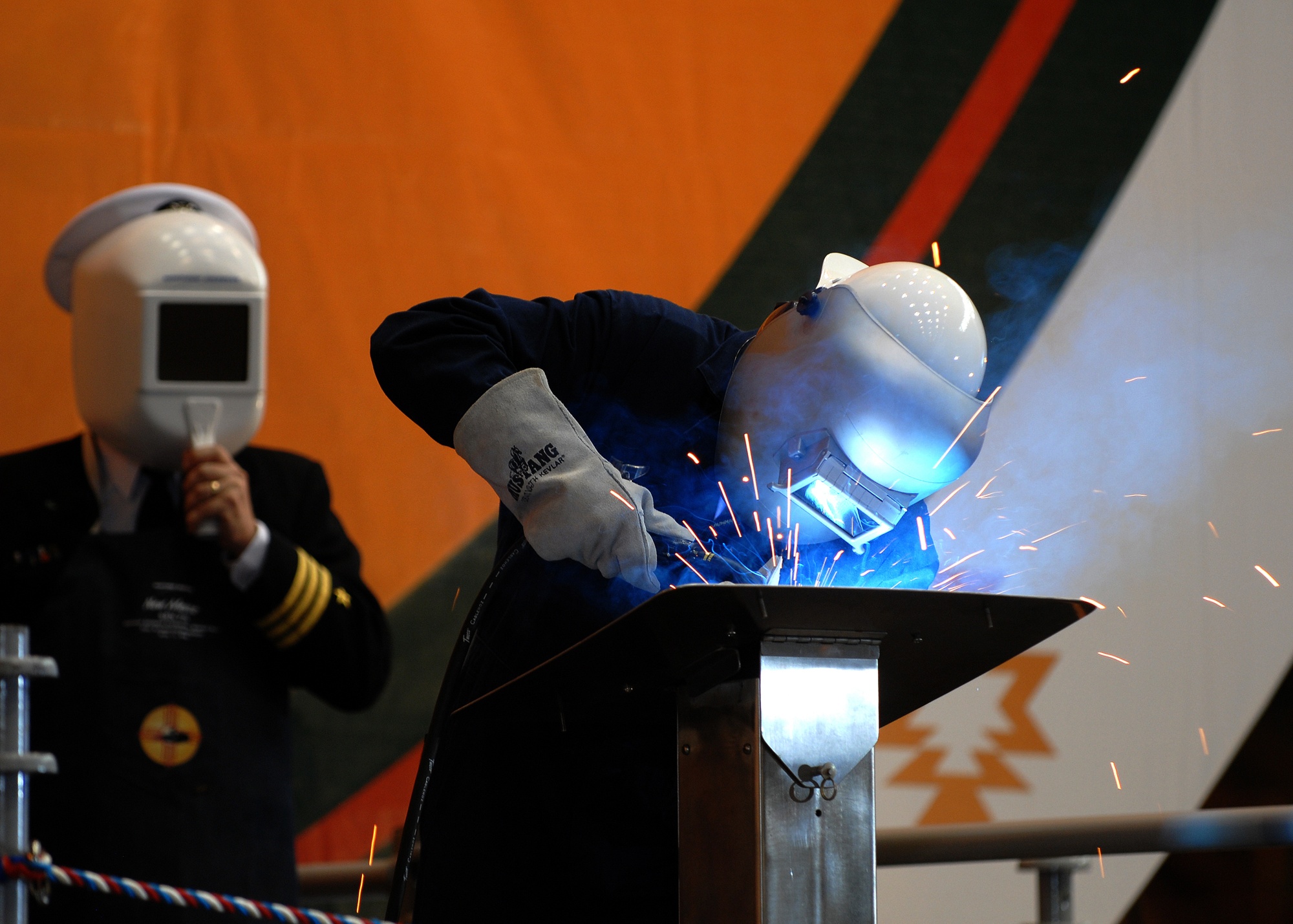
BLS does not publish a wage figure for "underwater welder" as its own occupational category. Underwater welding work falls partly under BLS's general Welders, Cutters, Solderers, and Brazers category, which reports a median annual wage of $53,750 (BLS OEWS, May 2025), and partly under commercial diving, which BLS also tracks separately but which this article does not have sourced wage data for. Neither figure isolates underwater welding specifically, so no single dollar number for this specialty appears anywhere in this article. Any site that quotes one specific salary for "underwater welders" is not quoting a published BLS statistic.
What underwater welding actually is
Underwater welding is a specialized niche that layers commercial diving skills on top of welding certification. It is not a separate credential track from the certifications covered elsewhere on this site; it is welding work performed by someone who is also a trained commercial diver, done on ship hulls, offshore platforms, pipelines, and other submerged structures that need repair or fabrication.
It is a small field relative to welding as a whole. BLS's general welding occupation, which underwater welding is part of, projects about 45,600 annual openings nationally from 2024 to 2034, with 2% overall employment growth that BLS attributes mainly to replacing workers who leave the field, not to new job creation. That is the broader occupational context underwater welding sits inside; BLS does not break out how many of those openings involve underwater or diving work specifically.
The certification path into it
AWS's Certified Welder (CW) credential is a common entry point into welding generally, and it is a reasonable starting credential for someone pursuing underwater welding, since it establishes baseline welding competency before layering on diving-specific training. CW is a performance-only test with no required course and no prerequisites, and it runs on a six-month recertification cycle.
Beyond CW, the D-series codes that employers cite in job postings, such as D1.1 for structural steel, D1.5 for bridge welding, and D1.6 for stainless steel, describe the kind of welding qualification an employer tests a candidate against for a specific type of work. These are qualified through an employer-administered test to that code's procedure, not certified by AWS to the individual the way CW is. Commercial diving certification itself sits outside AWS's system entirely and is not something our certification codex covers.
Review the full certification codex for how AWS's individual credentials (CW, CWI) differ from the D-series codes employers test against directly.
Where to train
Underwater welding training typically starts with standard welding education, the same programs that prepare welders for any specialty, before a separate commercial diving program. Our national program directory covers 938 welding programs across all 50 states, sourced from IPEDS and College Scorecard data, as a starting point for the welding half of that path. The directory does not track commercial diving schools separately, since that credential falls outside the welding-specific taxonomy this site covers.
Across those 938 programs, 816 are public, 99 are private for-profit, and 23 are private nonprofit. Public programs report a median in-state tuition of $4,265 a year, while private for-profit programs report a median total program cost of $21,228. Commercial diving programs run on a separate cost and length structure that this dataset does not include, so a reader planning both halves of an underwater welding path should budget for welding training and diving training as two distinct costs, not one combined figure.
Why the two credentials stay separate
Welding certification and commercial diving certification come from different systems entirely. AWS issues welding credentials like CW to individuals and coordinates the D-series codes that employers test welders against. Commercial diving certification runs through separate diving-industry organizations with their own training standards, unconnected to AWS. A welder who wants to work underwater needs both, but neither credentialing body tracks or reports on the combined specialty as a single job title, which is part of why no combined wage figure exists for it.
What to verify before pursuing this specialty
No general state license governs welders as a category. Regulation is concentrated in boiler and pressure-vessel work specifically, in some states and major cities, loosely coordinated through the National Board of Boiler and Pressure Vessel Inspectors; we have not verified a current, exhaustive list of which jurisdictions license this work. Confirm any state- or role-specific requirement directly with the relevant state board, not with this article.
FAQ
What does BLS say underwater welders make?
BLS does not publish underwater welding as its own category. The general welding occupation it belongs to reports a $53,750 median annual wage (BLS OEWS, May 2025), and a separate commercial diving occupation exists in BLS data, but no combined or isolated underwater-welding figure exists.
Is underwater welding a real, separate certification?
No single "underwater welder" credential exists in the AWS taxonomy. It is welding certification, commonly starting with AWS CW, combined with separate commercial diving training and certification.
Why don't more sites give a straight salary answer for this job?
Because BLS doesn't track it as its own line item. A specific dollar figure attributed to BLS for "underwater welders" is not something BLS has published.
Where should I start if I'm interested in this field?
Start with standard welding training and an entry credential like AWS CW, covered in the certification codex, then research commercial diving programs separately. Our program directory covers the welding side of that path.